




Introduction — The Living Charm of the Albaicín
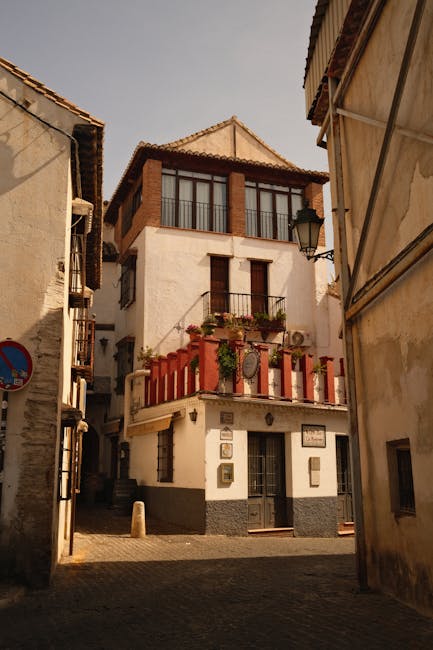
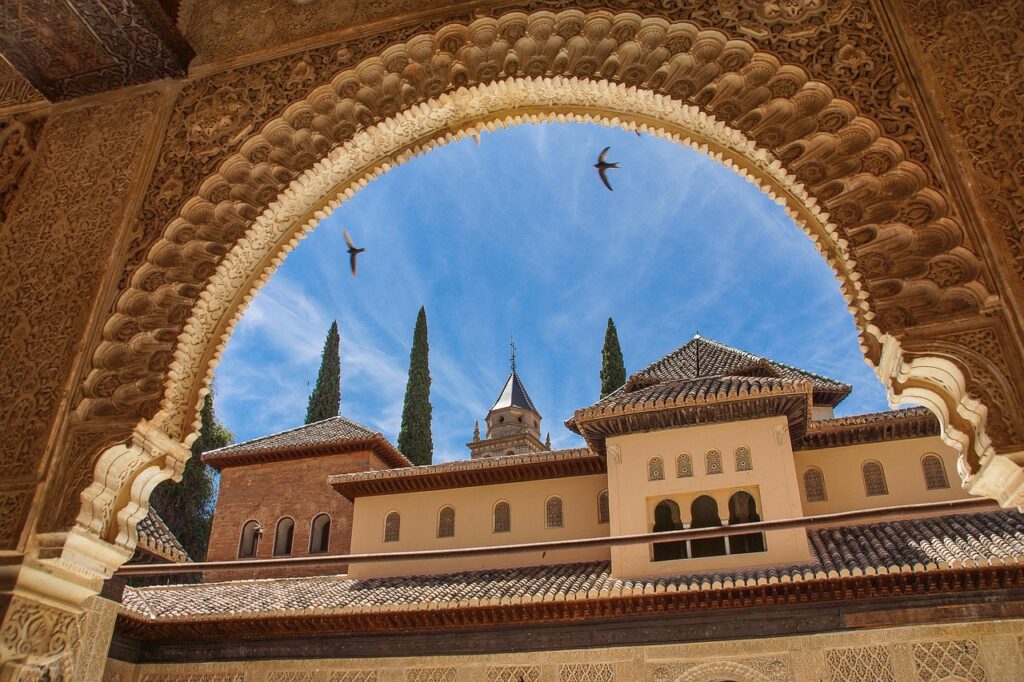
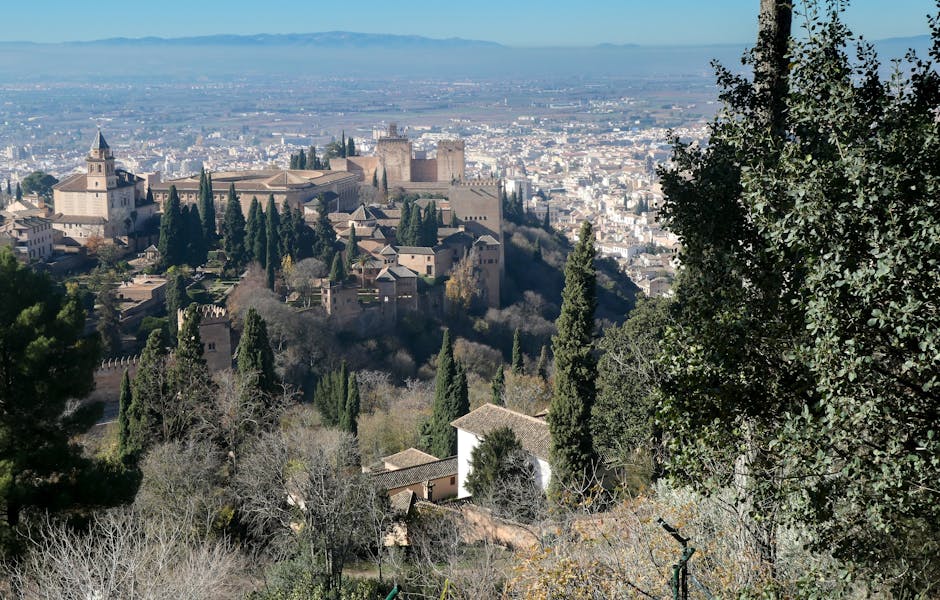
Perched on the hill opposite the Alhambra, the Albaicín (also spelled Albayzín) is one of Granada’s most atmospheric neighborhoods. Its narrow, winding lanes, whitewashed houses, shaded squares and viewpoints with sweeping views of the Nasrid palace create an ambience where deep history and everyday life mingle. Once an Andalusian medina, the Albaicín still bears visible traces of the Muslim culture that shaped Granada’s urban identity for centuries: public baths, patio houses, albarrana towers, small mosques converted into churches, and a social fabric rooted in artisanal trade and welcoming visitors.
This practical overview is designed for travelers who want to lose themselves in the Albaicín’s streets, spot the most meaningful sites from the Islamic period, and pick up local tips for a calm, discovery-filled visit. You’ll find detailed information on must-see places (with exact addresses), walking routes, indicative opening hours and prices for key monuments and museums, plus suggestions for getting off the main tourist trails.
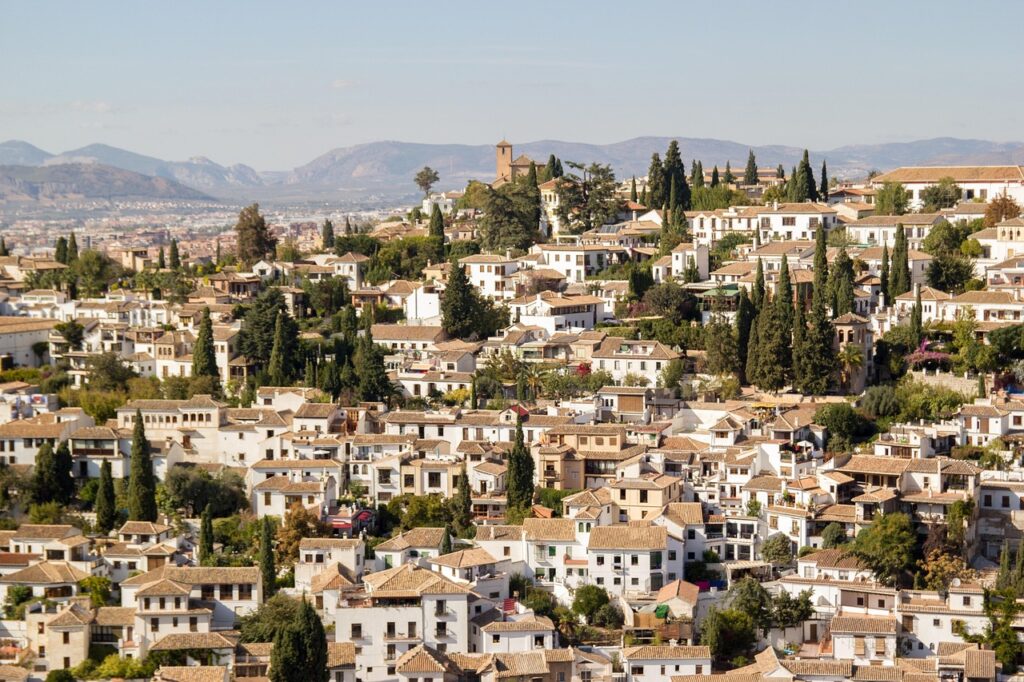
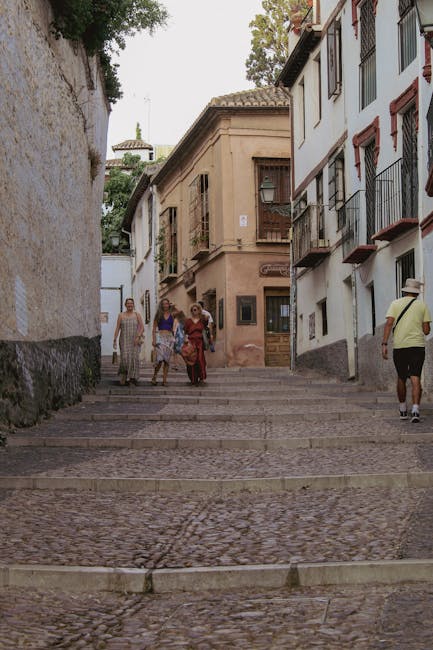
Although the Albaicín is best explored on foot, bring comfortable shoes: cobbles, steep slopes and steps shape the experience and require a bit of effort. Mornings and late afternoons are ideal times to visit — the light softens, summer heat eases and viewpoints (especially the Mirador de San Nicolás) reveal unforgettable panoramas of the Alhambra and the Sierra Nevada. If you’re into photography, the Albaicín offers intimate frames (wooden doors, flower-filled patios) and wide vistas of the Alhambra; I’ve included visual suggestions below to inspire your walk.
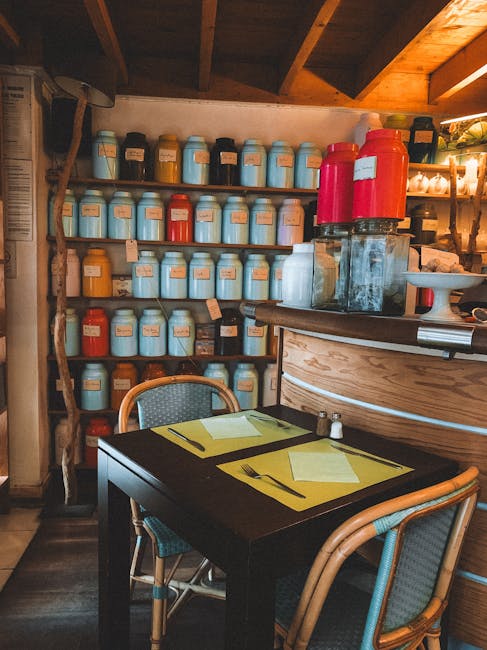
This guide covers both the historical dimension — the urban fabric inherited from Granada’s Islamic era — and the neighborhood’s contemporary vitality: teterías (tea houses), small galleries, artisan workshops and restaurants serving Andalusian specialties. Practical details (addresses, prices, opening times) are provided to help plan your visit; note that some hours may change with the season or on public holidays, so it’s wise to double-check before visiting specific sites.
In the sections that follow you’ll find a deep-dive into the history and urban layout, recommended walking routes (with precise directions), monuments that preserve Muslim-era traces, cultural and craft hubs, plus practical tips to make the most of your time in the Albaicín. At the end there’s a short conclusion summarizing key takeaways and ideas for extending your Granada exploration.
History and Urban Landscape: Understanding the Albaicín
The Albaicín is the product of continuous historical layering, dominated by the Islamic period (8th–15th centuries) and reshaped after the Christian conquest of 1492. The name likely comes from the Arabic al-bayyāzīn (the washers) or local toponymic variations; in any case, the urban fabric reveals medina-style planning: twisting streets designed for shade and coolness, houses built around inner patios, basins and small gardens that served both climatic and social functions.
Walking through the Albaicín is like reading the city as a document: narrow streets protected inhabitants from sun and wind, miradores (public balconies) offered strategic and symbolic viewpoints, and albarrana towers — sometimes integrated into later façades — recall urban defensive measures. Many current buildings are reworkings of Nasrid houses: lime-washed exteriors, carved wooden frames, semicircular arches and small openings facing inward.
Key historical points of interest:
- Mirador de San Nicolás — Plaza de San Nicolás, 18010 Granada. Free; open 24/7 (public space). Famous for its views of the Alhambra and spectacular sunsets.
- Plaza Larga — Plaza Larga, 18010 Granada. A historic square, once the heart of commerce and markets in the old medina.
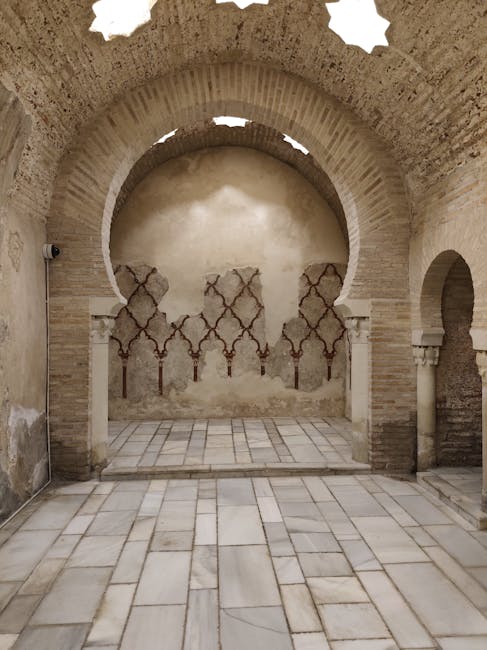
- El Bañuelo (Arab Baths) — Calle Horno de Oro, 15, 18010 Granada. Entrance approximately €2.50–€4.00. Indicative opening hours: 10:00–14:00 and 16:00–19:00 (check before visiting). Public baths of caliphal origin, remarkable for their state of preservation.
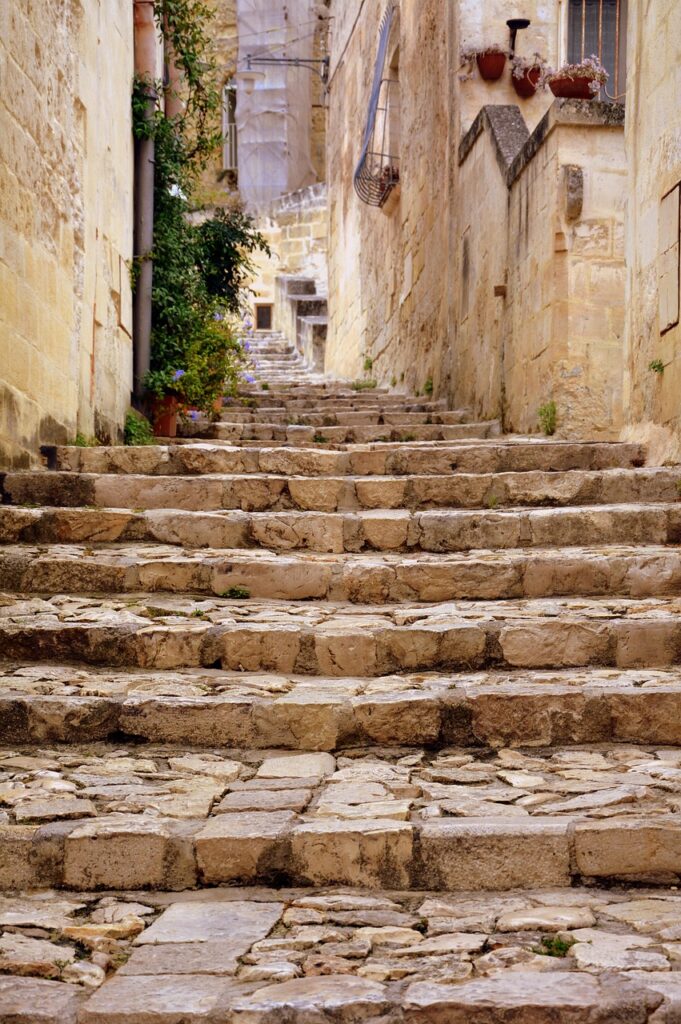
Adding to these sites are the many cármenes — traditional houses with enclosed gardens unique to Granada — scattered through the neighborhood and forming a precious micro-heritage of green spaces. The entire district, listed as a UNESCO World Heritage site together with the Alhambra and the Generalife, owes its conservation to the quality of its urban fabric and the richness of its cultural history.
Essential Walks: Routes and Practical Tips
The best way to discover the Albaicín is on foot, allowing yourself to get pleasantly lost in its streets. Here are three complementary routes suited to different visit paces:
Route 1 — Short panoramic circuit (1–1.5 hours)
- Start: Plaza Nueva (near the Cathedral). Reference address: Plaza Nueva, 18009 Granada.
- Climb via Calle Calderería Nueva up to Plaza Larga (stop for a mint tea).
- Continue along Calle Elvira and take the ascending alleys toward the Mirador de San Nicolás (Plaza de San Nicolás, 18010). Pause for photos and to take in the view.
- Descend via Cuesta del Chapiz to the Paseo de los Tristes overlooking the Darro river.
Tips: Allow at least 1h30 if you want to take photos and enjoy a tea break. The mirador can get crowded in the late afternoon; visiting early in the morning helps avoid the crowds.
Route 2 — In-depth historical walk (2–3 hours)
- Start: Paseo de los Tristes, the promenade along the Darro river (Paseo de los Tristes, 18010 Granada).
- Head up the Carrera del Darro, then take the Cuesta de los Chinos to reach the historic residential area of the Upper Albaicín.
- Visit El Bañuelo (Calle Horno de Oro, 15, 18010) and explore the small churches that were once mosques.
- End at the Mirador de San Nicolás for a panoramic view of the Alhambra.
Tips: Bring water, sunglasses and a hat in summer; in winter the streets can be damp and slippery. Some sections have uneven stone paving, so avoid heels and be cautious with strollers. Aim for mornings or late afternoons for the best light and temperatures.
Route 3 — Cultural and artisan walk (2 hours)
- Start: Plaza Nueva. Head up to Calle Calderería Nueva, famed for its teterías (tea houses).
- Stop at a tetería for mint tea: average price €2.50–€4.00. Example: Tetería Aljibe, Calle Calderería Nueva, 5, 18010 Granada. Opening times: roughly 11:00–23:00 (may vary).
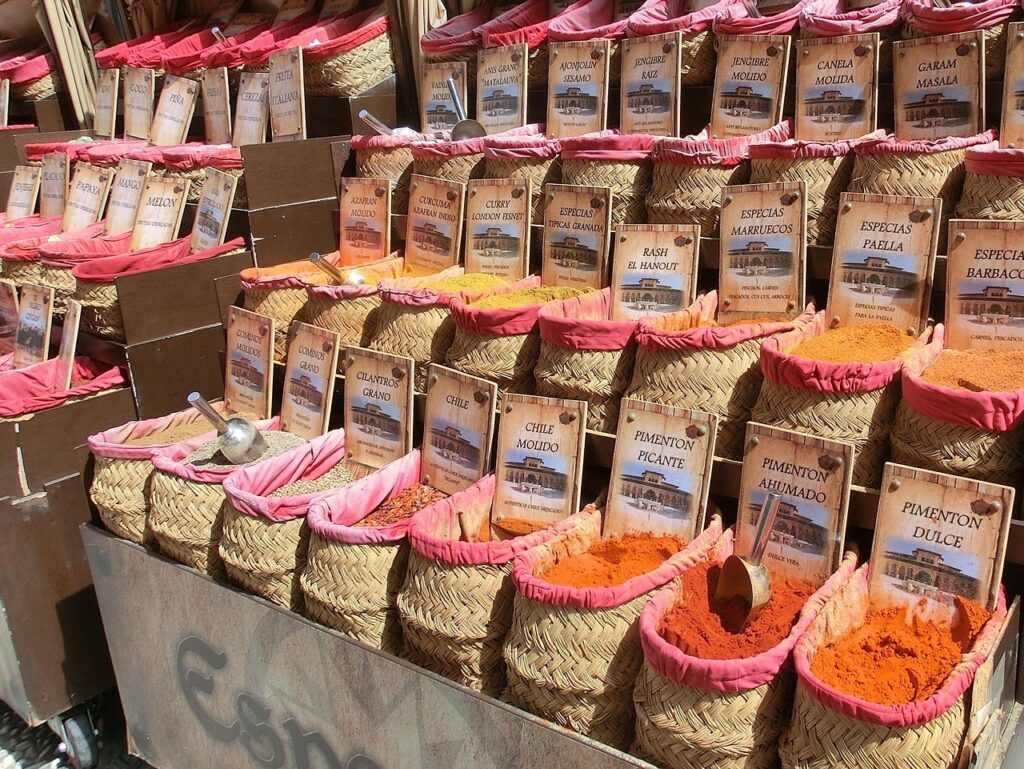
- Visit artisan workshops around Plaza Larga: potters, jewelers and weavers selling traditional wares.
Tips: Bargain politely in small workshops if you plan to buy. Typical souvenirs include embroidered tablecloths, hand-painted ceramics and small bottles of aromatic essences.
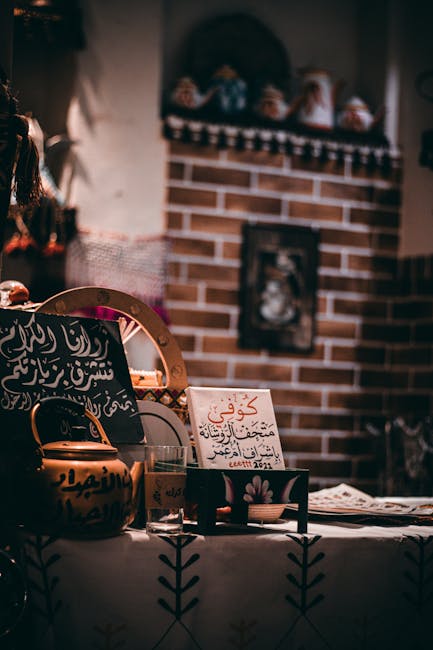
Monuments and Traces of Muslim Culture in the Albaicín
While the Alhambra is the most famous Nasrid monument, the Albaicín preserves direct and indirect traces of the city’s Muslim past. These range from public baths to mosque remains, gates and stretches of old walls. Here’s a selection of spots not to miss, with addresses, opening times and prices where applicable.
- El Bañuelo (Arab Baths) — Calle Horno de Oro, 15, 18010 Granada. Price: around €2.50–€4.00. Indicative hours: 10:00–14:00 / 16:00–19:00. Description: one of the best-preserved Arab baths on the Iberian Peninsula, with vaulted ceilings, niches and original hydraulic systems. The site illustrates purification rituals and social life in Islamic cities.
- Casa del Chapiz (Moorish House) — Calle del Chapiz, 22, 18010 Granada. Museum and gardens often open for guided visits. Price: varies by exhibition; garden visits are often free or low-cost. Description: a transformed Nasrid house showcasing domestic architecture and enclosed gardens (cármenes).
- Iglesia de San Nicolás — Plaza de San Nicolás, 1, 18010 Granada. Access to the small church above the mirador. Hours: 9:00–20:00 (to be confirmed). Description: this building embodies the layering of religious functions — once a mosque, converted after 1492, and serving as a prominent urban landmark facing the Alhambra.
Other, more diffuse traces include fragments of walls and towers, ancient gates and houses where the spatial layout still reflects Islamic domestic traditions (central patios, courtyard-facing windows, basins). Urban historians also point to the persistence of Arabic toponyms in local place names, which punctuate the neighborhood’s collective memory.
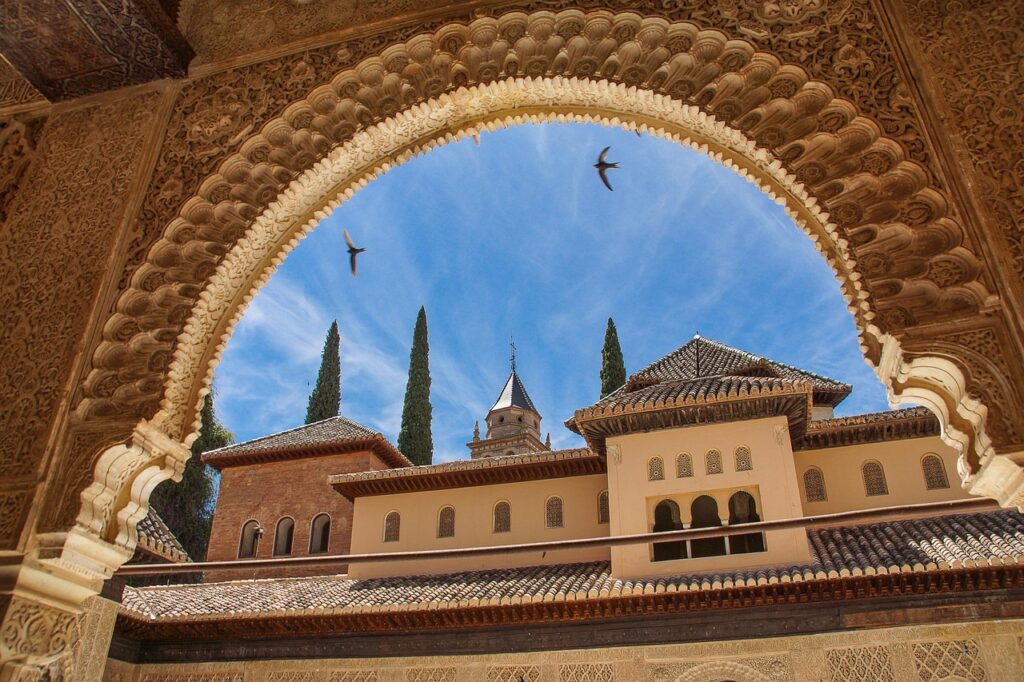
Visiting these sites with an informed eye helps you understand how daily life, social practices and urban planning were shaped by Muslim culture. For a deeper immersion, look for local guides specialized in medieval Andalusian history: many independent guides offer themed tours focused on the Islamic heritage of the Albaicín (indicative prices: €80–€120 for a private 2–3 hour tour, depending on group size).
Culture, Crafts and Taverns: Encounters and Tastes
The Albaicín is a lively neighborhood where craft traditions and culinary culture meet. The teterías on Calle Calderería and around Plaza Larga serve aromatic teas and pastries with an Eastern influence — a perfect spot to rest between visits. Here are a few recommended addresses and practical notes:
- Tetería Aljibe — Calle Calderería Nueva, 5, 18010 Granada. Tea price: about €2.50–€4.00. Hours: generally 11:00–23:00. Atmosphere: Moroccan décor, lanterns and rugs; great for mint tea and pastries.
- Restaurante Carmen de la Alcubilla — Camino de las Tomasas, 33, 18010 Granada (at the upper entrance to the Albaicín). Meals: typical Andalusian dishes €15–€30. Hours: 13:00–16:00 and 20:00–23:00. View: terraces with panoramas of the Alhambra.
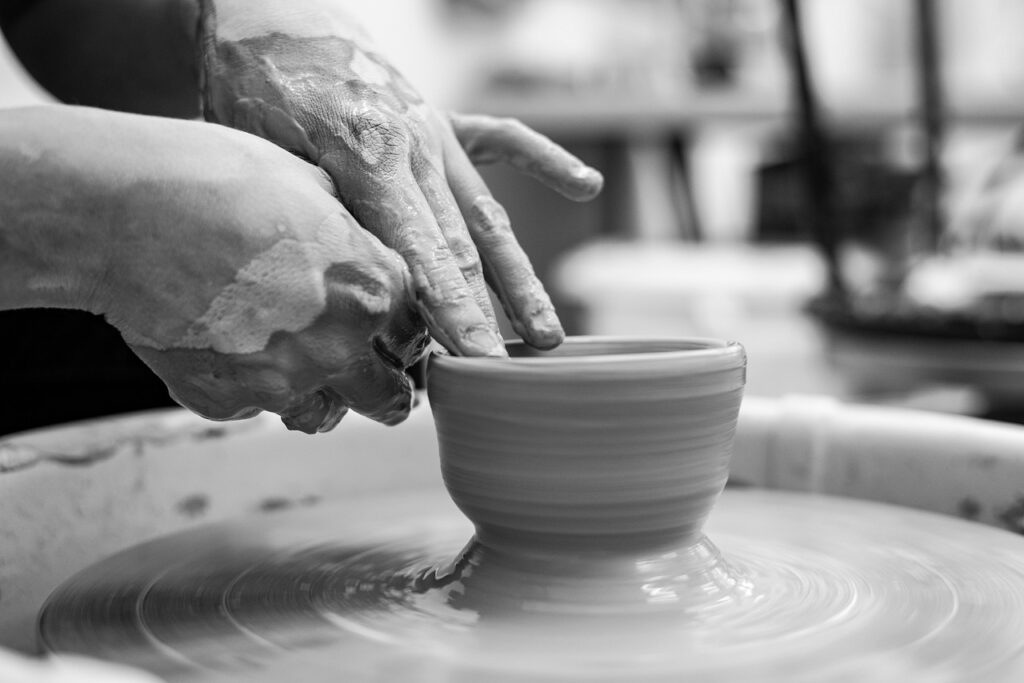
- Cerámica Albayzín pottery workshop — Calle Panaderos, 28, 18010 Granada. Goods: handmade ceramics (plates, azulejos) €10–€80 depending on the piece. Workshop hours: 10:00–14:00 / 16:00–19:00.

Food tips: try local sweets like pestiños and turrones in small bakeries, and ask shopkeepers about product origins — many items are local or handmade. For a classic Andalusian dinner, look for a carmen with a terrace — dining with the Alhambra lit up is unforgettable but can be pricier: expect €25–€45 per person in panoramic restaurants.
Nightlife in the Albaicín is quieter than in more modern districts: wine bars, small improvised flamenco scenes and guitar concerts appear in the evenings. For an authentic experience, look up flamenco nights in Sacromonte and at the junction of the two neighborhoods (tickets €15–€30). Meeting artisans often gives you the chance to buy directly from them — carry cash as small shops sometimes accept cards less readily.
Practical Tips for Visiting the Albaicín
Visiting the Albaicín benefits from a little planning to get the most out of the experience. Here are practical, logistical and cultural pointers:
- Shoes and clothing: opt for comfortable, slip-resistant walking shoes. In summer protect yourself from the sun; in winter bring a jacket as wind-exposed alleys can be chilly.
- Timing and seasons: spring (April–June) and autumn (September–October) are the best times to avoid summer heat and crowds. Sunsets at the Mirador de San Nicolás are particularly popular in summer — arrive early to secure a good spot.
- Safety and respect: the Albaicín is generally safe, but watch out for pickpockets in very busy tourist areas. Respect residents’ privacy: avoid photographing private interiors without permission. Patios and gardens are often private property.
- Transport: car access is limited in the historic core. Use public buses (urban lines) or park on the outskirts (Parking options: Parking Alhambra, Paseo del Salón). Taxis are handy for uphill trips, but walking remains the best way to explore.
- Tickets and reservations: for the Alhambra, book well in advance through the official site (Calle Real de la Alhambra, s/n, 18009 Granada). Prices: general tickets vary between €14 and €20 depending on sections; times vary. For private guided tours in the Albaicín, reserve 24–48 hours ahead in high season.
To enrich your visit, pair the Albaicín walk with a stroll through Sacromonte (the flamenco gypsy quarter) and a visit to the Alhambra. If your curiosity runs deep, read about Nasrid history and the cultural coexistence that shaped Granada. Local libraries and certain museums offer resources in English if you want to dive deeper.
Conclusion — The Albaicín as a Sensory and Historical Experience
Visiting the Albaicín is more than a sightseeing walk: it’s a sensory immersion in a neighborhood where geography, architecture and collective memory come together to tell centuries of history. Its streets are visible layers of a plural past — rooted in a Mediterranean Muslim culture, enriched by Christian traditions and animated by contemporary Andalusian life.
As you wander, you’ll sense the logic of a city crafted for daily life: shaded courtyards, narrow passages, small squares and horizon-facing viewpoints. Places like El Bañuelo, Plaza Larga and the Mirador de San Nicolás are anchors that help you grasp the neighborhood’s historical continuity. Meanwhile, tea houses, artisan workshops and restaurants showcase its persistent vitality and the ability to adapt without losing its soul.
To make the most of your visit, give yourself time: stroll without a strict schedule, be drawn by an open door, a shaded terrace or a working artisan. If you want a deeper historical perspective, choose a themed guided tour. Above all, respect local customs and residents’ daily life so this living heritage can continue to breathe and welcome visitors.
Ultimately, the Albaicín invites slow observation and curiosity: every corner tells a story, every viewpoint offers a new image of the Alhambra, and every encounter with an artisan or shopkeeper adds to your understanding of a neighborhood that remains one of Granada’s most sensitive hearts. Safe travels and enjoy discovering the Albaicín!