





Introduction: Granada’s Muslim roots through the ages
For many, Granada is synonymous with the Alhambra, that hilltop palace-fortress that alone captures the imagination of Muslim Spain. But Granada’s Islamic presence, heir to Al-Andalus, goes far beyond that single monument: it’s woven into the street pattern of the Albaicín, the narrow lanes lined with white houses, the surviving baths, the medieval trade routes and even the place names. To understand Granada is to dive into almost eight centuries of history where dynasties, craftsmen, scholars, poets and merchants succeeded one another, and where the Nasrid dynasty (al-Nasr) shaped a one-of-a-kind palace-city on the Mediterranean edge.
Al-Andalus was a cultural laboratory where Islam, Christianity and Judaism met, producing a rich urban and artistic civilization. In Granada, the Nasrid dynasty (1238–1492) took that legacy to its peak: the Palacios Nazaríes of the Alhambra are a high point of Muslim architecture in the West, blending finely carved stucco, decorated woodwork, water gardens and light plays. But the city around the fortress — the Albaicín neighborhood, the baths (hammams), the fondouks and the Corral del Carbón — tells of an Andalusi daily life where knowledge, trade and rituals coexisted.
This general guide sets out to explore those Muslim roots not only through history, but also with practical landmarks: exact addresses, opening times, indicative prices, sensory descriptions and local tips for immersive visits. The goal is twofold: to give historical keys — chronology, key players, social functions — and to make your visit practical and enjoyable. You’ll find information on must-see sites like the Alhambra (Palacios Nazaríes, Generalife, Palacio de Carlos V), the Albaicín with its viewpoints, the Corral del Carbón, El Bañuelo (the Arab baths) and the Madraza, plus walking routes and suggestions to feel the Nasrid imprint in Granada’s contemporary life.
Prices and opening hours mentioned reflect public information available at the time of writing, but they can change: it’s recommended to check official sites (for example the Patronato de la Alhambra y Generalife for tickets) before you go. Finally, practical tips — when to book, how to avoid the crowds, best times for light — will help you make the most of your stay. Whether you’re a history buff, a photographer or a curious traveler, Granada offers a sensory immersion: the scent of orange trees, the trickle of water, the shade of mashrabiya screens and the warm stone in alleyways tell the Muslim story of Al-Andalus at the heart of the Iberian Peninsula.
Alhambra and the Palacios Nazaríes: the Nasrid core
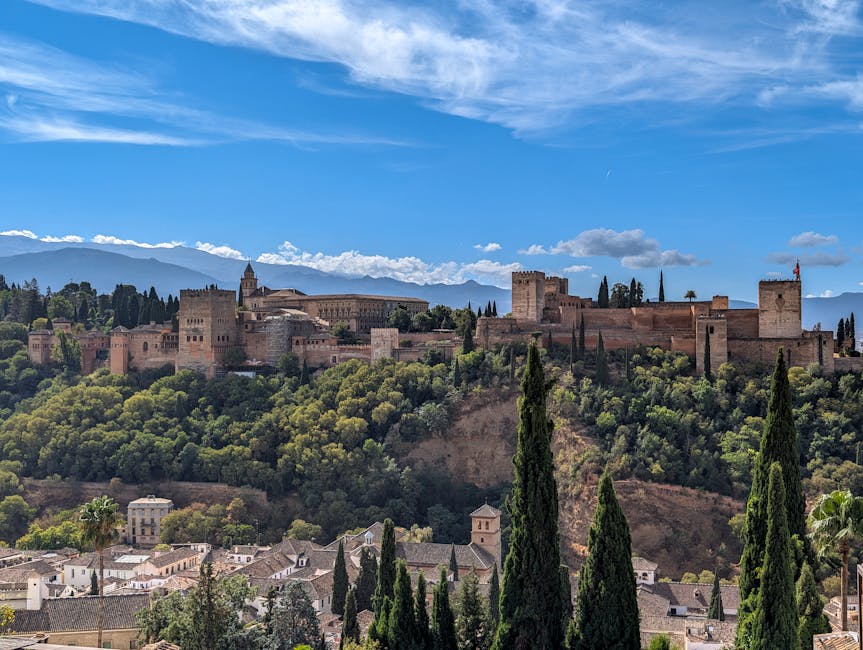
The Alhambra (Palacio de la Alhambra y Generalife) is the essential site to grasp the Nasrid dynasty’s artistic flowering. Perched on the Sabika hill, it overlooks Granada and offers a military, administrative and residential reading at once: fortress, royal residence and stage for representation. Address: Calle Real de la Alhambra, s/n, 18009 Granada, Spain. The complex includes several zones: the Alcazaba (the military fortress), the Palacios Nazaríes (the Nasrid palaces), the Generalife (gardens and summer palace), and the Renaissance Palacio de Carlos V.
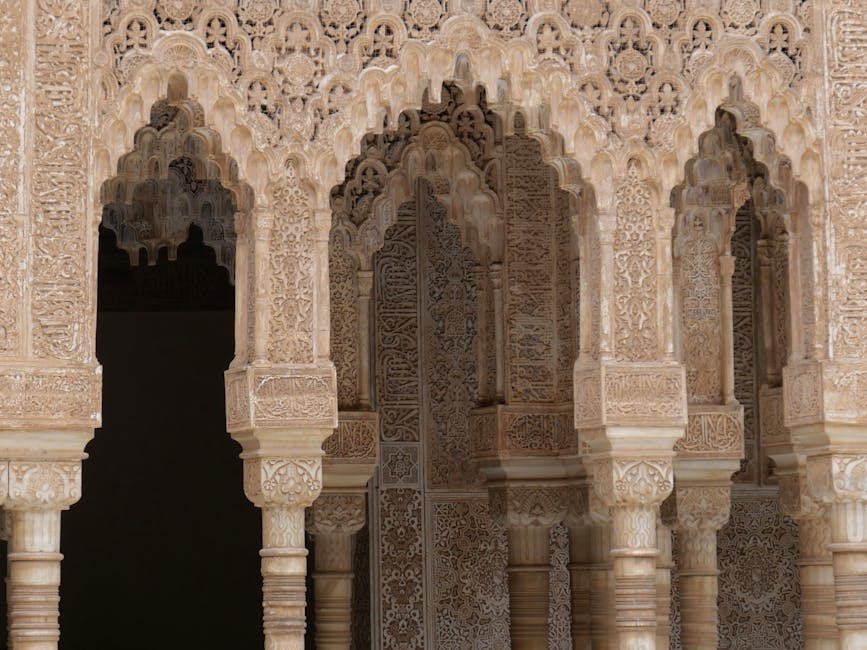
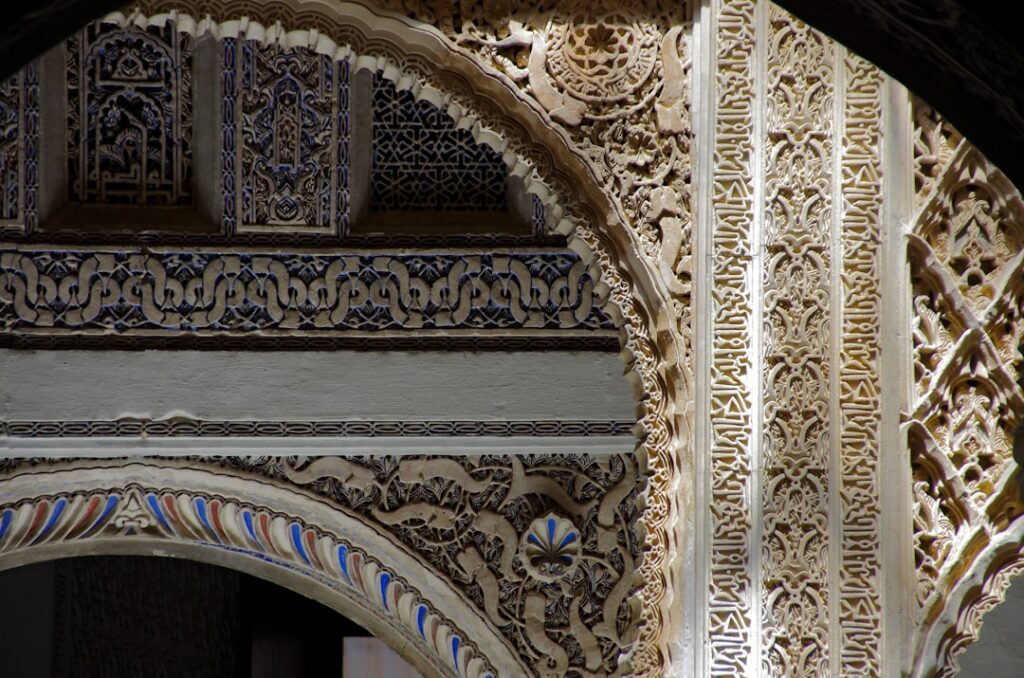
The Palacios Nazaríes — made up of the Palace of Comares and the Mexuar, and the famous Court of the Lions — are masterpieces of detail: geometric and epigraphic stucco, worked wood, mashrabiya-like screens, muqarnas and reflective pools that fracture light. Interior visits are strictly time-limited (time slots are enforced to enter the Palacios Nazaríes), so it’s vital to book your ticket in advance. Indicative prices: combined Alhambra + Generalife + Palacios Nazaríes ticket: around €16.50 (full adult daily rate), with concessions for youth and seniors; night visits to the gardens and palaces: roughly €9–14 depending on the format. General opening hours (check seasonally): morning 08:30–14:00 and afternoon 14:00–20:00 in high season (April–October), shorter winter hours down to 18:00. The Palacios Nazaríes have scheduled entry slots (for example 10:00–10:30); arrive 30 minutes before your slot for security checks.
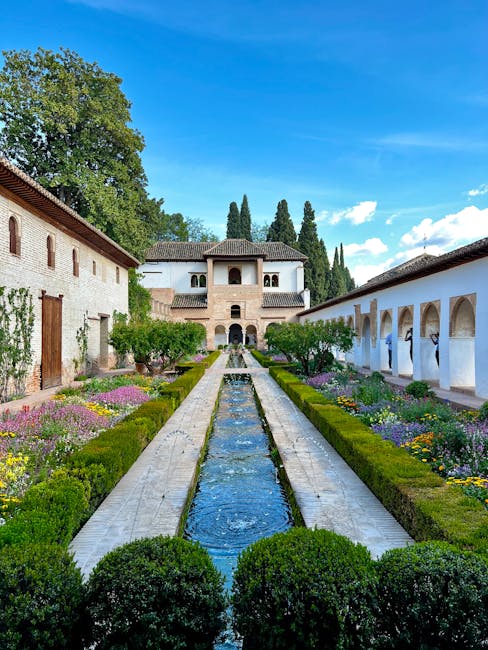
Visitor tips: grab a ticket with an early Palacios Nazaríes entrance (8:30) to enjoy the soft morning light on the stuccoes; alternatively, visit late afternoon outside peak season to avoid heat and crowds. The official audio guide or a guided tour will help you interpret the poetic inscriptions (Nasrid poems) that adorn the walls. A careful look at the Generalife gardens reveals the Nasrid approach to landscape: water channeled through rills and pools creates microclimates and sightlines that extend the architecture. Address for the Generalife: Palacio del Generalife, Calle Real de la Alhambra, s/n, 18009 Granada. Night packages are sold separately and offer a magical atmosphere, with sculpted volumes lit to enhance shadows and the relief of the decoration.
The Albaicín and the San Nicolás viewpoint: the urban memory of Al-Andalus
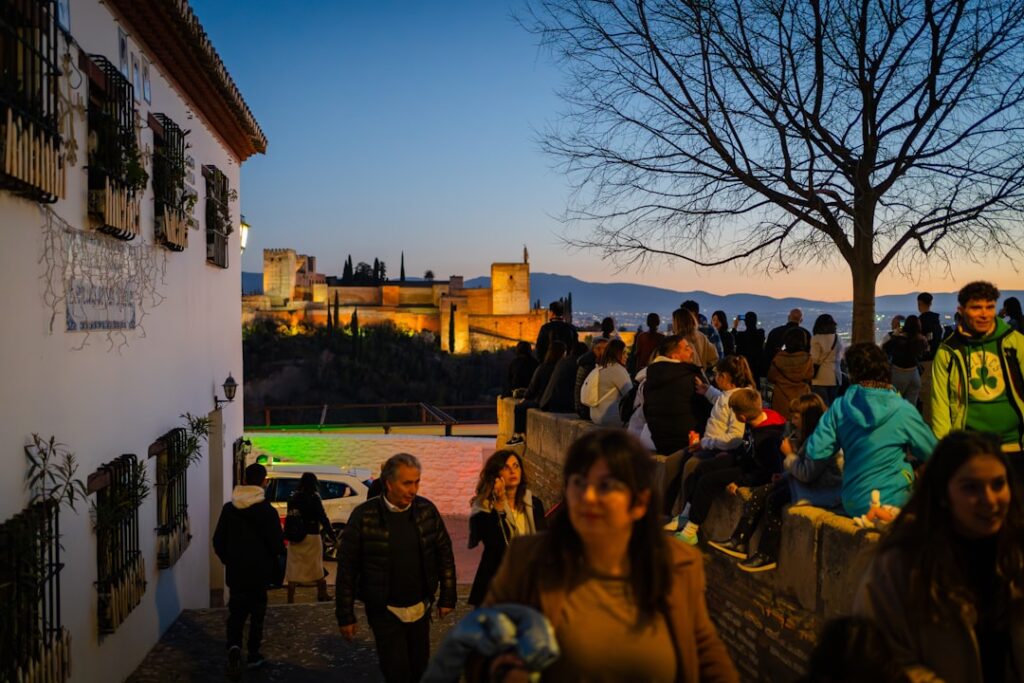
The Albaicín (or Albayzín) is the old Arab quarter, a UNESCO World Heritage area, clinging to the hillside opposite the Alhambra. Its labyrinthine alleys, shady squares, patio houses and viewpoints are a living example of Andalusi urbanism inherited from the Muslim period. The Mirador de San Nicolás (Plaza de San Nicolás, 18010 Granada) is the most famous lookout: from the plaza the Alhambra’s facade stands out against the Sierra Nevada hills, offering one of Spain’s most photographed compositions, especially at sunset.
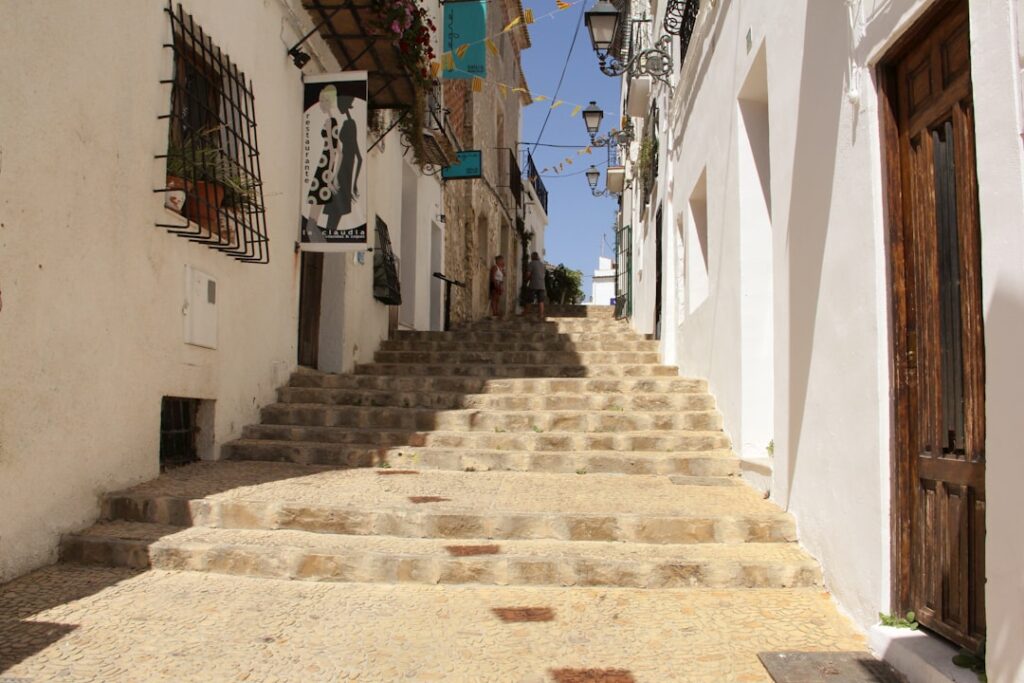
Wandering the Albaicín you follow historical layers: former alcazabas, mosques converted into churches (often hidden), the sites of old souks and private gardens called carmenes that punctuate the neighborhood. Carmenes are vegetated, enclosed houses typical of Granada where you can still feel the hygothermal and aesthetic logic of Andalusi dwellings: white walls, planted patios, orange trees and fountains. Main streets to know: Calle Calderería Nueva (the teahouse street), Carrera del Darro (along the lower bank of the Río Darro), and Placeta de Carvajales which leads to the Mirador de San Cristóbal.
Practical tips: for an authentic visit, get up early or come after 18:00 in high season — shade slips away quickly in this steep neighborhood. Wear sturdy shoes (cobbles and steep slopes). A walk through the Albaicín pairs well with a descent to the Paseo de los Tristes and a crossing of the Río Darro toward the Alhambra. For a tasty stop, try a traditional tetería (e.g. Tetería Dar al-Horra, Calle Calderería Nueva, approximate address in the Albaicín center); price for tea and Oriental pastries: €3–7.
Recommended nearby visits: El Bañuelo (the Arab baths) and the Casa Morisca (examples of domestic architecture), as well as themed walks offered by local guides who tell the story of daily life under the Nasrids — markets, trades and urban hierarchy. The Albaicín is also a hub for popular festivals and cultural weeks where Arabic music, poetry and gastronomy meet, giving a living glimpse into contemporary Muslim heritage.
Baths, markets and civic buildings: El Bañuelo, Corral del Carbón and the Madraza
Beyond the palaces, the Muslim imprint also appears in everyday infrastructure: public baths, merchant warehouses and centers of learning. These places offer different perspectives on Nasrid society: hygiene, commerce and knowledge. Three notable sites to visit are El Bañuelo (the Arab baths), the Corral del Carbón (an old alhóndiga and fondouk), and the Madraza (the former Quranic school).
El Bañuelo (the Arab baths) is one of the best-preserved in Spain. Address: Carrera del Darro, 31, 18010 Granada. These hammams date to the Almohad period (11th–13th centuries) and show the typical spatial organization: cold room (bayt al-barid), warm room (bayt al-wastani) and hot room (bayt al-sakhun), with vaulted ceilings pierced by star-shaped openings that let in pinpointed light. Indicative ticket: around €2–3 (reduced rates for students and seniors). Opening hours: generally 10:00–18:00, but vary by season; check with the Granada Tourist Office. The visit gives a tangible sense of social life: public baths as places for sociability, business and hygiene rituals.
The Corral del Carbón (Patio del Carbón) is located at Calle Mariana Pineda, 5, 18009 Granada. It was an alhóndiga and fondouk (warehouse and inn for merchants) dating from the 14th century, emblematic of Andalusi Mediterranean trade. Today it hosts exhibitions and concerts. Entry: often free or symbolic (€2–4) depending on programming. Hours vary with events; conventional hours for daytime visits are 10:00–18:00. The building illustrates the importance of commercial exchanges in the Nasrid city, connecting Granada to Andalusi and Mediterranean networks.
The Madraza of Granada (the former madrasa) deserves a mention: the old Quranic school, known as the Madraza, was located near Plaza de las Pasiegas (Plaza de las Pasiegas 3, 18009 Granada), and some restored halls are used for cultural exhibitions. Scientific and literary instruction was taught here, making Granada an important intellectual center. Guided visits discuss study programs — religious sciences, Islamic law, mathematics and astronomy — and the role of Nasrid patrons. Prices: exhibitions/museums €2–5. Hours: variable, often 10:00–14:00 and 17:00–20:00.
Finally, for a contemporary sensory experience linked to Andalusi traditions, modern hammams (e.g. Hammam Al Ándalus Granada, Calle Santa Ana, 15, 18009 Granada) offer thermal baths and massages inspired by Arab rituals: packages €45–70 depending on duration and treatment (booking recommended). This modern tourist offering can complement a physical sense of Al-Andalus’s hygienic heritage, even if adapted to modern standards.
Routes, practical tips and immersive experiences to better understand the Nasrid legacy
To get the most out of a trip to Granada focused on its Muslim roots, it helps to structure thematic routes and follow some practical advice. Here are three suggested itineraries (half-day, full day and in-depth) and logistical recommendations for booking, getting around and interpreting this heritage.
Short route (half-day): start at the Mirador de San Nicolás (Plaza de San Nicolás, 18010 Granada) at sunrise or late afternoon for a spectacular view of the Alhambra. Then descend through the Albaicín’s alleys toward the Paseo de los Tristes, cross the Puente del Aljibillo to Carrera del Darro and finish with a visit to El Bañuelo (Carrera del Darro, 31). Duration: 2.5–3 hours. Perk: an immediate understanding of the visual relationship between the Sabika hill and popular housing.
Full-day route: buy a combined ticket for the Alhambra (mandatory reservation via the official site patronato.alhambra-patronato.es), start with the Palacios Nazaríes in the morning (reserved time slot), explore the Generalife and the Palacio de Carlos V (Plaza Arquitecto García de Paredes, Alhambra) then head down into the city center for lunch. In the afternoon, walk through the Albaicín, visit the Madraza and the Corral del Carbón (Calle Mariana Pineda, 5). Duration: 7–8 hours. Perk: a full pace with ideal light for photos throughout the day.
In-depth route (2–3 days): add a night visit to the Alhambra gardens, a wellness session at Hammam Al Ándalus (Calle Santa Ana, 15), a themed guided tour (Nasrid social history or architecture), and exploration of Sacromonte surroundings (cave museums and flamenco shows with Romani roots influenced by Andalusi traditions). Duration: 2–3 days. Perk: cultural context and full immersion.
Practical tips: book Alhambra tickets well in advance (often weeks ahead in high season). Check official hours: Alhambra morning 08:30–14:00 / afternoon 14:00–20:00 in high season; Palacios Nazaríes time slots apply. Granada’s historic centers are walkable but expect steep hills; taxis and buses (routes C30/C32 to the Alhambra from Plaza Mariana Pineda or Puerta Real) provide access. For photographers, morning light on the stuccoes and late-afternoon light on the Albaicín’s white facades are ideal. Respect palace rules (no large bags, photography prohibited in certain rooms).
Encounters and cultural experiences: join a walk led by a local guide specialized in Andalusi history, attend a lecture at the Centro Cultural CajaGRANADA, or seek arabo-Andalusian music concerts (programs vary). Taste Andalusi-influenced cuisine: dishes based on almonds, honey, citrus and spices; sample Arabic pastries in traditional sweet shops downtown. Finally, talk to artisan-restorers who work on stone and wood: their technical explanations of stucco and woodworking will help you understand Nasrid craftsmanship.
Conclusion: keeping the Nasrid legacy alive in Granada
Granada is a city where the Muslim legacy is readable at multiple scales: monumental (the Alhambra and the Palacios Nazaríes), urban (the Albaicín and its viewpoints), social (baths, markets and fondouks) and intellectual (the Madraza and knowledge circuits). Exploring these traces helps you understand how Al-Andalus shaped not only an architectural style, but also a way of living in the city — centered on water, shade, the patio and exchange. The Nasrids concentrated this aesthetic and social organization in a striking landscape where every decorative detail carries meaning, a poem or a technical function.
Practically speaking, a successful visit requires preparation: book the Alhambra in advance via the official site (patronato.alhambra-patronato.es), pick the right time slots, combine monumental visits with neighborhood strolls, and leave time for sensory pauses (teterías, gardens, hammams). Prices and hours in this guide are orientation points: plan for seasonal variations and events. For deeper understanding, favor specialized local guides and thematic tours that place objects and spaces in their social and economic context.
Finally, keeping the Nasrid legacy alive is not just about material conservation: it’s also about cultural transmission. Musical events, craft workshops and educational initiatives help connect past and present. As you wander the Albaicín, listen to the rill of the Generalife channels or read the poetic inscriptions in the Palacios Nazaríes, you take part in that living memory. Take time to listen, look at details and ask questions of residents and artisans — you’ll be surprised by the wealth of stories each stone reveals.
Whether you come for history, architecture, photography or simply to soak up the atmosphere, Granada offers a complete journey into the Muslim roots of Al-Andalus. Respect the sites, plan your visits and let yourself be absorbed by the beauty of a civilization that turned stone and water into living poetry. Safe travels, and may your time in Granada be both informative and deeply moving.