





Introduction — Why the sightseeing bus seduces, but often disappoints in Granada
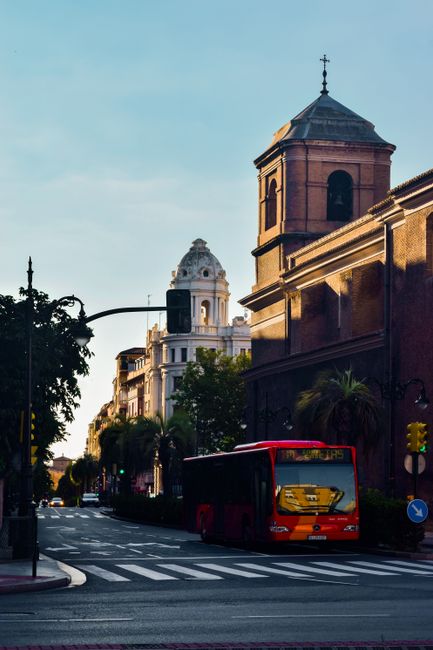
Double-decker tourist buses, loud paint jobs and multilingual pre-recorded commentaries included, have become staples in many European cities. In Granada they promise a turnkey solution: see the highlights with minimal effort, listen to history through headphones, and hop on and off at will. On paper, it sounds great — in practice, and especially in Granada, it’s worth taking a step back. This piece isn’t meant to demonize a perfectly valid transport option for some travelers. It aims to dismantle the assumption that a sightseeing bus automatically equals a smart, efficient way to experience a compact, layered, and lively city like Granada.
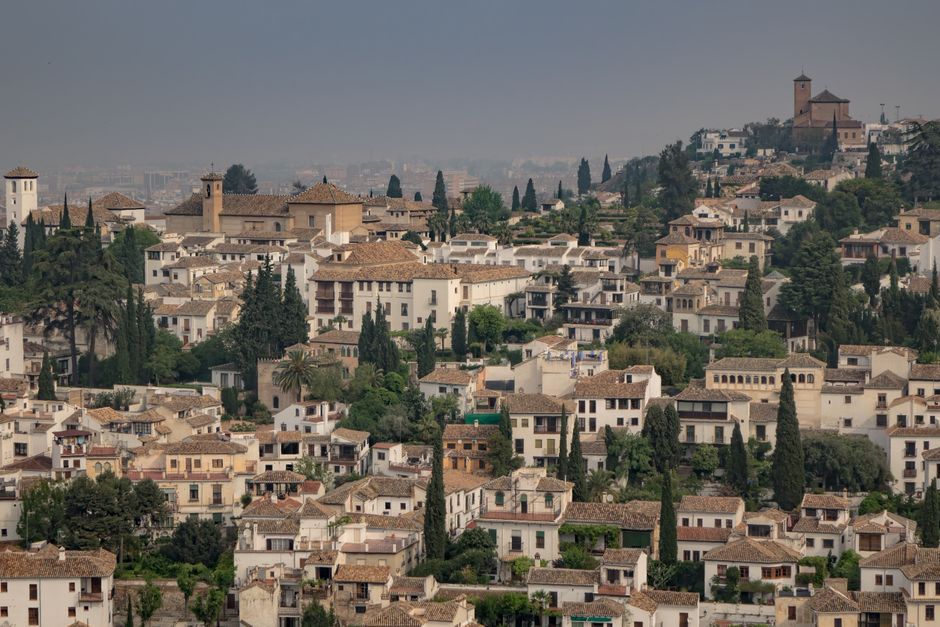
Granada is above all a city of angles, narrow lanes, viewpoints and walls packed with micro-stories: the Albaicín clinging to the hill, shady little squares where you hear cups clinking, Renaissance palaces and miradors that set facades ablaze with ochres and gold at sunset. Many of these experiences are lived slowly, at street level, by paying attention to details — patios, azulejos, worn facades, communities baking in the sun. The tourist bus tends to flatten those textures: panoramas seen through a windshield, standardized explanations that don’t adapt to weather or crowds, and scheduled stops that favor the most visited spots.
Then there’s the question of value for money and time. A bus ticket can cost between €15 and €25 depending on the operator and duration (always ask for the exact price when buying). For that sum you gain comfort, yes, but often lose authenticity. In Granada — a compact city where most major sites are walkable or reachable by cheap local transport — that money can be spent differently: a half-day with a local guide, a great tapas meal, a longer, more respectful visit to the Alhambra, or an evening of flamenco in an authentic tablao.
Finally, tourist buses promote a mass-tourism image: fixed routes, stops built around “Instagrammable” highlights, and little openness to the unexpected. Despite its summer crowds, Granada still offers quiet discoveries — sunrise at the Mirador de San Nicolás, a morning stroll through the San Agustín market, or a coffee shared in a tetería in the Albaicín. Those moments hardly translate from a high seat on a tour bus.
In the sections that follow I’ll explain why sightseeing buses are often overrated in Granada, analyze their concrete limits (logistics, cost, loss of meaning), and, above all, suggest precise, verifiable and immediately useful alternatives: guided walks led by locals, bespoke routes, quieter teterías and miradors, public transport and convenient shuttle services. Each suggestion includes exact addresses, indicative opening times and price ranges so you can decide with full information. The goal: help you get the most out of Granada without falling into the homogenizing trap of mass tourism.
Why the sightseeing bus is often overrated in Granada
Let’s start with the logic: hop-on hop-off buses work well in sprawling, horizontally spread capitals (London, Rome, Barcelona) where distances between sights are long and alternative transport is complicated. Granada, by contrast, is dense and hilly, and its main appeal — the relationship between the Alhambra and the lower town — is best appreciated on foot, by climbing and slowing down. Here are concrete reasons the tourist bus often disappoints visitors here.
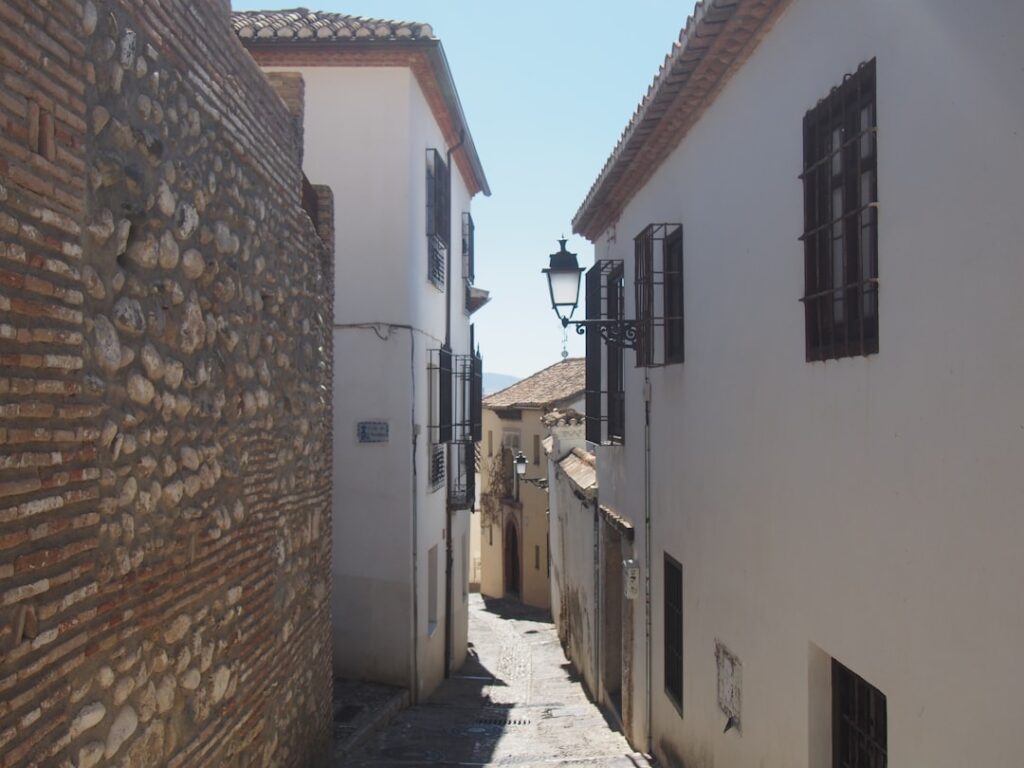
- Flat, artificial perspective: from the bus you see the outside, but you miss the inside — patios, wooden doors, azulejos, tiny alleys. Granada is made of micro-places that tell the story, not just distant facades.
- Fixed routes and the wrong pace: buses follow standardized circuits. They often dedicate very little time to the most interesting areas (Albaicín, Sacromonte) because they need to keep to a schedule. The result: a skim-through with no depth.
- Generic commentary, no local context: pre-recorded audio stays impersonal. It can’t answer specific questions or adapt its narrative to the weather, the crowd, or the group’s energy.
- Crowds and waiting: in high season you might wait half an hour under the sun for a stop, or arrive somewhere at the same time as dozens of other tourists. In Granada the magic often depends on quiet moments — sunrise over the Alhambra, a nearly empty tetería at 10 a.m. — and those are ruined by continuous bus circuits.
- Cost vs alternatives: €15–25 can cover a tapas meal for two, a 2-hour local walking tour (usually €10–25 depending on the format), or contribute to an Alhambra ticket (book well in advance) — a visit that requires a proper pace.
This is not about demonizing buses in every situation. They fit travelers with reduced mobility, families with tired kids, or anyone who wants a quick, effortless overview. But if you’re after the essence of Granada — its micro-narratives, hidden viewpoints, tapas bars where you end up chatting with locals — the bus is often a poor compromise.

Logistical and cultural limits: what buses can’t do
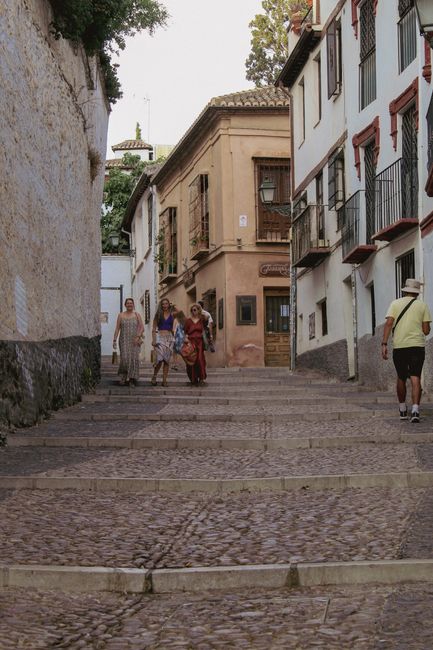
Let’s go deeper: beyond the visual experience, there are practical and cultural limits. First, buses don’t handle access to historic neighborhoods well. The Albaicín and Sacromonte are made of steep, narrow lanes — places where stopping for a chat with a craftsman or tea in a tetería is worth far more than a scheduled photo stop. Second, time windows: buses force a temporal frame; they aren’t designed for letting a visitor linger an hour at a mirador or spend a long time in a museum.
Culturally, there’s a tension between “looking” and “living.” A bus tour turns the city into a collection of images; Granada also works through sensory layers — smells of fresh bread, footsteps on stone, guitar music drifting from a patio. These impressions need time to develop, and buses don’t encourage that slowness. Also, audio commentaries, often mechanically translated, oversimplify historical complexity: the layered coexistence of Muslims, Christians and Jews in the Middle Ages, later urban reorganizations, or local urban resistance — everything gets reduced to anecdote.
Finally, there’s the impact on the city itself. Bus routes concentrate flows on already saturated spots, increasing pressure on certain shops and public spaces while leaving other neighborhoods calmer. For sustainable, respectful tourism it’s better to spread visitors around and encourage alternative routes that benefit local businesses rather than the international chains served by tour circuits.
All in all, choosing a sightseeing bus in Granada is accepting a trade-off: ease in exchange for depth. If your schedule and priorities favor ease, go for it. But if you want to come away with intimate memories and a real understanding of the city, you’ll be better off spending your time and money elsewhere.
Concrete, powerful alternatives — walking tours that are worth every euro
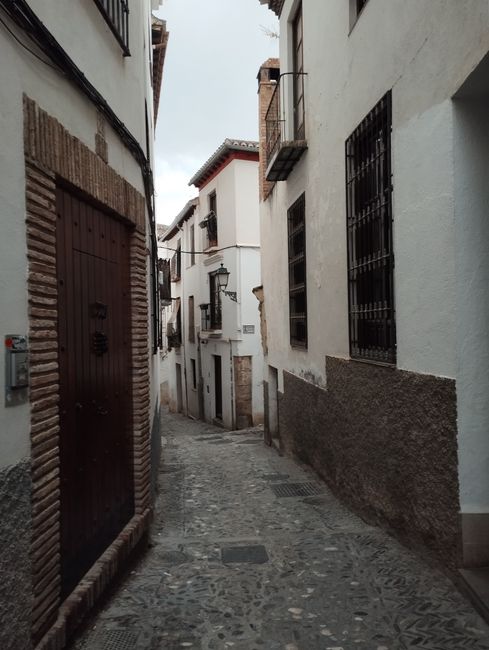
If you want an alternative that truly conveys Granada’s richness, start with guided walking tours led by locals. Free walking tours and independent guides offer a very different immersion: personal anecdotes, on-the-ground orientation, stops to taste local products, and the real chance to ask questions. Here are two tried-and-true options with addresses, times and prices.
-
Granada Free Tour — Meeting point: Plaza Nueva
Meeting address: Plaza Nueva, 6, 18010 Granada (at the foot of the Carrera del Darro, near the fountain).
Times: departures daily at 10:30 and 17:30 (high season; check online for exact schedules).
Price: « pay what you want » model (tip suggested €8–15 per person if you enjoyed the tour).
Why it’s good: these tours last 2h30, cover the Albaicín and the Paseo de los Tristes, and provide lively historical context. Guides are often passionate locals who adapt the story to the group. -
Walking Tours Granada — Albaicín & Miradores guided visit
Meeting address: Mirador de San Nicolás, 18010 Granada (in front of the main terrace, facing the Alhambra).
Times: departures at 09:30 and 16:00 (seasonal).
Price: €15–22 per person (online booking recommended).
Why it’s good: this tour focuses on Nasrid architecture, the lookout houses and gives practical advice for visiting the Alhambra according to timings to avoid queues.
Booking tips: always ask for the guide’s full name, a phone number and the exact duration. If you’re interested in thematic tours (flamenco in Sacromonte, food, photography), opt for private tours — expect €80–120 for a half-day private guide (prices drop per person with larger groups).
Also consider specialized Alhambra guides: the Patronato de la Alhambra y Generalife sells official tickets online (search address: Plaza Arquitecto García de Paredes, s/n, 18009 Granada). Combined tickets (Nasrid Palaces + Generalife) usually cost around €14–18 depending on category and age; private guided visits raise the price but secure access to specific time slots and much deeper explanations. Book in high season weeks in advance — it’s one of the rare cases where a tour bus won’t be able to help you.
Concrete alternatives — miradors, teterías and local restaurants to favor
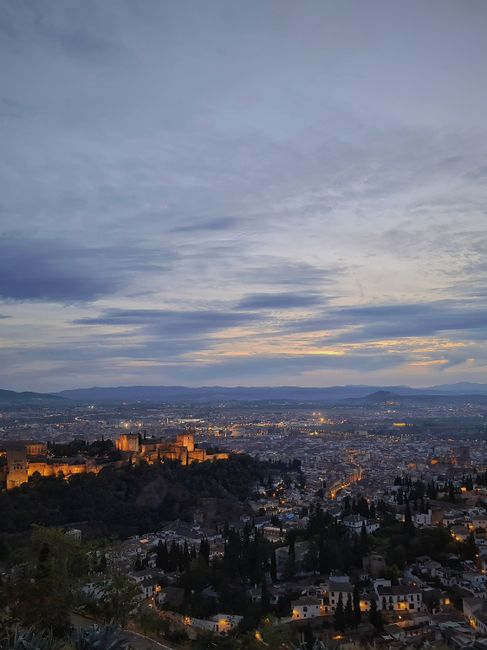
To replace the bus’s panoramic experience, focus on specific viewpoints and local spots where you can take your time. Here are exact addresses, opening times and price ranges to turn a grabbed photo into a living memory.
-
Mirador de San Nicolás — Albaicín
Address: Plaza Mirador de San Nicolás, 18010 Granada.
Hours: public space, accessible 24/7; the terrace is extremely popular at sunset.
Price: free.
Why go: direct views of the Alhambra and the Sierra Nevada; arrive early in the morning to beat the crowds and catch soft light on the palaces. Bring a water bottle and sturdy shoes — the paving is uneven. -
Carmen de los Mártires
Address: Calle Peña y Goñi, s/n, 18009 Granada (near the Paseo del Generalife).
Hours: generally open 10:00–20:00 (times vary by season; check locally).
Price: garden free; palace and garden visits often accept a modest donation or small ticket (around €3 depending on local offers).
Why go: one of the city’s best-maintained gardens — peaceful and far less crowded than the popular miradors. -
Tetería Aljibe — a cultural berber tea experience
Address: Calle Calderería Nueva, 12, 18010 Granada (the main tetería street in the Albaicín).
Hours: 10:00–23:00 depending on season.
Price: teas €2.50–5; pastries about €2–4.
Why go: for an immersive sensory experience in Andalusian tea culture — intimate atmosphere, Moorish decor, often background music and a setting that invites conversation. -
Bodegas Castañeda — traditional tapas
Address: Calle Almireceros, 1-3, 18010 Granada.
Hours: 10:30–00:30 (closed some Sundays; check in high season).
Price: tapas €2.20–4.50; half-pint beer €1.60–2.50.
Why go: a Granada institution for generous, affordable tapas frequented by locals — better social observation than a bus stop designed for tourists.
These places share an essential quality: they demand time. Take time to wait for the light, talk to the server, study the facades. That’s precisely what the bus does not encourage.

Getting around smart — local transport, cards and practical tips
Choosing not to take a tourist bus doesn’t mean wandering blindly. Granada has efficient public transport and mobility options that suit most visitors. Here’s what to know, with addresses and indicative prices.
-
EMT Granada city buses
Network: lines serving the center, the Alhambra (line C30/C32 depending on the period) and outlying neighborhoods. Main stops: Plaza Mariana Pineda, Puerta Real, Plaza Isabel la Católica.
Price: single ticket around €1.40 (indicative); rechargeable cards available at kiosks and machines.
Tip: use these lines to get up toward the Alhambra and then walk to the miradors; you save time and energy without locking into a fixed circuit. -
Granada metro (line 1)
Useful for linking some residential areas; handy if you’re based outside the center.
Price: single ticket roughly €1.40–1.60 depending on journey.
Tip: combine metro and bus to optimize trips to outer sights (e.g. Science Park, Palacio de Congresos). -
Taxis and ride-hailing
Pickup points: Puerta Real, Plaza Nueva, Avenida de la Constitución.
Price: in-town rides often €4–10 depending on distance; airport transfers (Federico García Lorca Granada-Jaén Airport) about €25–35 (depends on traffic and luggage).
Tip: for a group of 3–4 people, a taxi can be cheaper and far more flexible than a bus.
Finally, consider electric bike rentals for less steep streets or scooter-sharing services if you’re confident riding them. But beware: the Albaicín and Sacromonte remain very steep and narrow — stick to walking in those neighborhoods.
Conclusion — Choose the experience that fits you in Granada
Sightseeing buses have their place: accessibility, comfort and a general view. But in Granada, a city that’s best savored slowly and in detail, these services quickly show their limits. They promise a commodified, complete vision which often fails to capture the real value of a stay here: encounters, unexpected stops, a cup of tea in a shaded tetería, a prolonged morning look at the Alhambra, or a conversation with a local guide who knows the lanes by name.
Instead of trying to “see everything fast” from an elevated seat, favor slower, more local options: a walking tour (Granada Free Tour, Walking Tours Granada), viewpoints like Mirador de San Nicolás, gardens such as Carmen de los Mártires, a tea break on Calle Calderería Nueva, and tapas at Bodegas Castañeda. Use public transport to optimize your journeys and book Alhambra tickets well in advance if it’s a priority. These alternatives can cost about the same as a bus ticket but offer far greater depth.
Also, leave some wiggle room in your schedule: arrive early at popular places, avoid sunset peak hours if you want photos with fewer people, and talk to locals — residents often point out corners off the usual routes. Granada rewards curiosity and slowness; so unless you have a strong constraint, I recommend favoring walking experiences led by people who live here over a conventional ride on a tourist bus.
Safe travels — and above all: take your time. Granada will repay you.